Custom widgets

Custom widgets enables application builders to securely extend Foundry applications with custom frontend code. Custom widgets are supported in Workshop, including both desktop and mobile modules. When building custom widgets for use in mobile modules, ensure the styling is compatible with the form factor of a mobile layout.

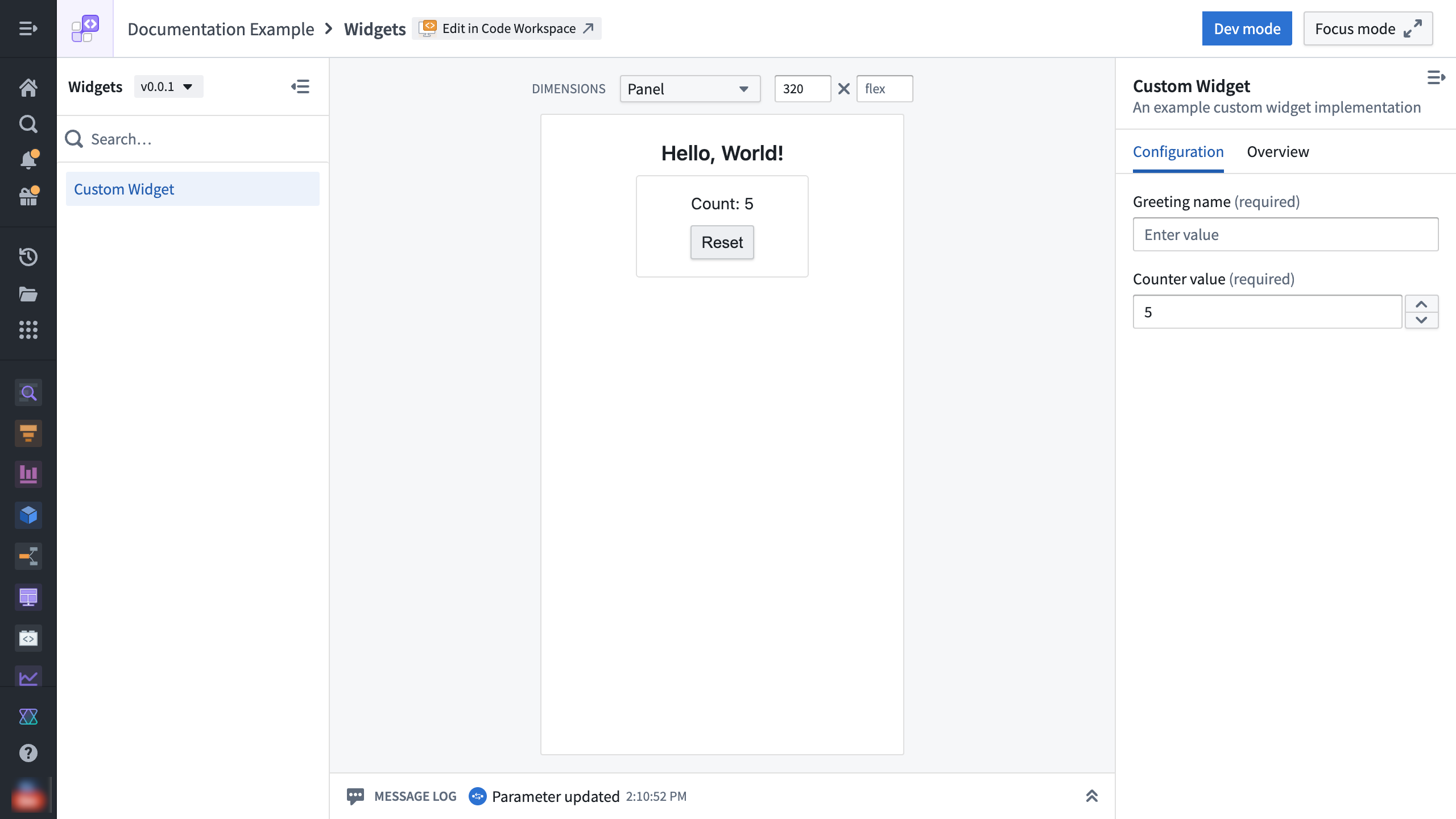
The custom widgets application displaying an example widget.

With custom widgets, technical builders can implement functionality not available out-of-the-box and provide a tailored experience for application users without needing to create a whole standalone custom application from scratch.

Examples that could be built with custom widgets:

  • A custom chart visualization such as a candlestick chart
  • An industry-specific view of an ontology object such as a flight plan
  • A signature entry widget

Widget sets can contain up to ten widgets, allowing you to publish multiple related widgets from a single code repository. Learn more about widget sets and core concepts.

Custom widgets can also detect and adapt to the host application's color scheme, enabling seamless dark theme support.

Benefits of custom widgets

  • Security: When you build custom frontend code, it is securely rendered and isolated from the main Foundry page.
  • First-class developer tooling: Custom widgets offer advanced tooling for developers, including CLIs, a dedicated developer mode, and libraries, so building widgets feels easy and natural.
  • Indexing: Custom widgets are indexed so users can discover them through search for reuse across multiple applications.

When should I use custom widgets?

You can embed a website built in Developer Console through a Workshop iframe widget. Custom widgets improve this workflow by reducing the complexity of requiring OAuth and subdomain registration, while adding advanced developer tooling. However, you should continue to use iframe widgets to host Developer Console websites for standalone custom applications where a dedicated application subdomain, full control of the page, and advanced features like a customizable Content Security Policy (CSP) are required.